Volga Lights & Switches
Client
Volga
Services
Website Design, Multi-Page Website, CMS
Timeline
3 Weeks
Year
2025
Volga Lights & Switches — Official Website
Client: Volga Lights & Switches
Industry: Electrical Components
Project Type: Multi-page Website with CMS-based Product Showcase
Role: UI/UX Designer & Framer Developer
Timeline: 3 weeks
Status: Website under final content updates (not yet officially published)
Overview
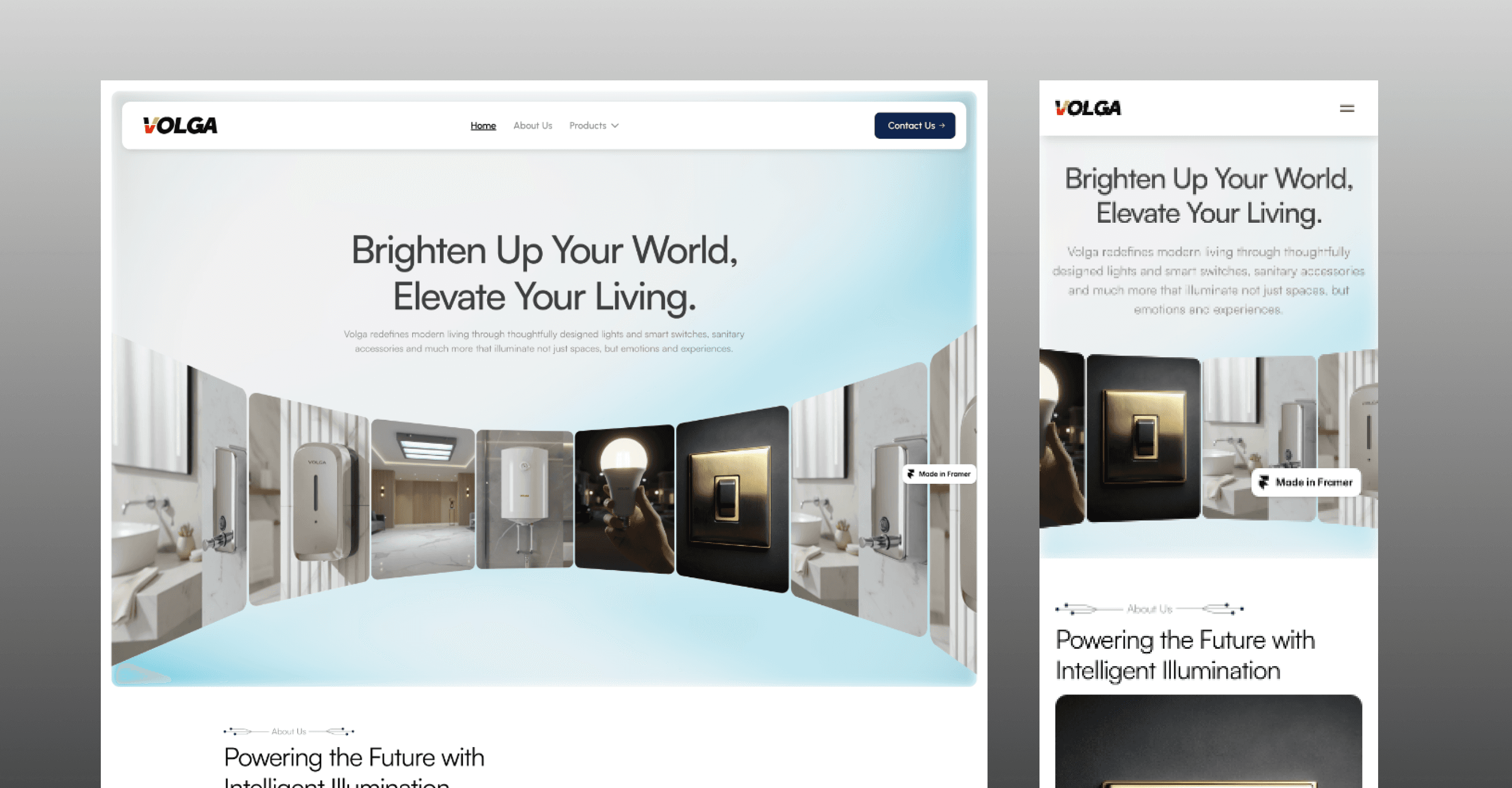
Volga is a brand operating in the electrical components space, offering a wide range of products such as lighting solutions, smart switches, sanitary accessories, water heaters, and more. The website was designed to reflect Volga’s vision of modern living, while also supporting a growing and diverse product catalogue through a structured CMS.
I was responsible for the complete design and deployment of the website, including CMS setup and product organisation. At the time of this case study, the website is fully designed and built, with a few products still being added to the CMS before official launch.
1. Discover — Understanding the Problem
The challenge
Volga needed a professional, fully responsive website that could:
Represent the brand with a clean and modern identity
Handle a large and expanding product range
Make product discovery simple and intuitive
The key challenge was balancing:
Visual simplicity with content density
Brand storytelling with practical product browsing
A structure that could evolve as new products are added
Key considerations
Clear categorization across multiple product types
Easy navigation for both first-time visitors and returning users
A light-themed design that feels premium and approachable
A CMS structure flexible enough for future updates
2. Ideate — Exploring Concepts
Inspiration & direction
I explored references from electrical components, manufacturing-led brands, and modern product websites to understand how large catalogs are presented without overwhelming users.
Early exploration focused on
Light, clean interfaces that let products stand out
Strong spacing and layout rhythm
Simple navigation patterns that support exploration
Visual consistency across categories
A moodboard was created to establish a direction that felt simple, modern, and engaging, without relying on excessive visual elements.
3. Design — Bringing the Concept to Life
Design execution
Using Figma, I designed:
Page layouts for multiple product categories
Clear content hierarchy to support scanning and readability
Consistent UI components to maintain familiarity across pages
CMS structuring
A major part of the design phase involved:
Carefully structuring products within a CMS
Defining scalable fields for product information
Ensuring layouts adapt smoothly to CMS-driven content
Build & deployment
The website was built entirely in Framer, maintaining close alignment between design and final output. A lot of the images used were creatively generated with the help of ChatGPT and Google Gemini. The build supports:
Full responsiveness across devices
Clean transitions and layout consistency
Easy content updates through the CMS
4. Test & Refine — Usability & Iteration
Refinement approach
Instead of formal usability testing, refinement focused on:
Reviewing navigation clarity across product categories
Ensuring users can move between sections without friction
Improving spacing, typography, and visual balance
Iterations included
Simplifying layouts where information felt dense
Improving product page readability
Refining overall flow to keep the experience calm and intuitive
The intent was to make browsing feel natural and effortless, even with a wide product range.
5. Delivery — Final Output
Current status
A fully designed and developed multi-page website
Light-themed, modern UI aligned with the brand’s identity
CMS-based product structure ready for scale
At present, a few products are still being added to the CMS, and the website is yet to be officially published. Once content updates are complete, the site will be ready for launch without further structural changes.
Key Takeaways
Strong structure is essential for product-heavy websites
CMS planning plays a critical role in long-term scalability
Simplicity helps users navigate complex catalogs with ease
Designing with future updates in mind prevents rework later